If you’re considering bringing a German Shepherd into your home, you’ve probably come across the terms “working line” and “show line.” These aren’t just fancy labels—they represent two distinct branches of the breed, each shaped by different priorities in breeding and purpose. Working line German Shepherds are the high-octane athletes, bred for jobs like police work, search and rescue, and protection sports. Show line German Shepherds, on the other hand, are the elegant showstoppers, refined for the conformation ring with a focus on beauty and balance. But what sets them apart in real life? From their build and energy levels to health quirks and family fit, the differences can make or break your choice. In this guide, we’ll break it down so you can decide which type aligns with your lifestyle, whether you’re dreaming of a devoted family companion or a dynamic working partner.
The Role of German Shepherds in Search and Rescue
The History and Origins of Working and Show Lines
The German Shepherd story starts in late 19th-century Germany, where Captain Max von Stephanitz sought to create the ultimate herding dog. In 1899, he founded the Verein für Deutsche Schäferhunde (SV), the breed’s governing body, emphasizing versatile working dogs that could herd sheep, guard property, and assist in military roles. Early German Shepherds were all about function—intelligence, endurance, and unflinching loyalty.
As the 20th century unfolded, World War I and II catapulted the breed into global fame, with GSDs serving as messengers, sentries, and medics. Post-war, breeders diverged. In Europe, particularly Germany, the focus stayed on working ability through rigorous trials like Schutzhund (now IGP), which tests tracking, obedience, and protection. This birthed the working lines: straight-backed dynamos built for the field.
Meanwhile, in America and parts of Europe, the emphasis shifted to aesthetics. The American Kennel Club (AKC) and similar clubs prioritized dogs that “stack” beautifully in the show ring—think exaggerated angles for fluid movement. Show lines emerged from this, with breeders selecting for conformation standards over raw performance. Today, working lines trace back to lines like the West German, East German (DDR), and Czech variants, each honed for specific tasks. Show lines, including American and West German show types, celebrate the breed’s noble silhouette. Understanding this split is key: it’s not just history—it’s the blueprint for everything from how they look to how they live.
Physical Differences Between Working and Show Line German Shepherds
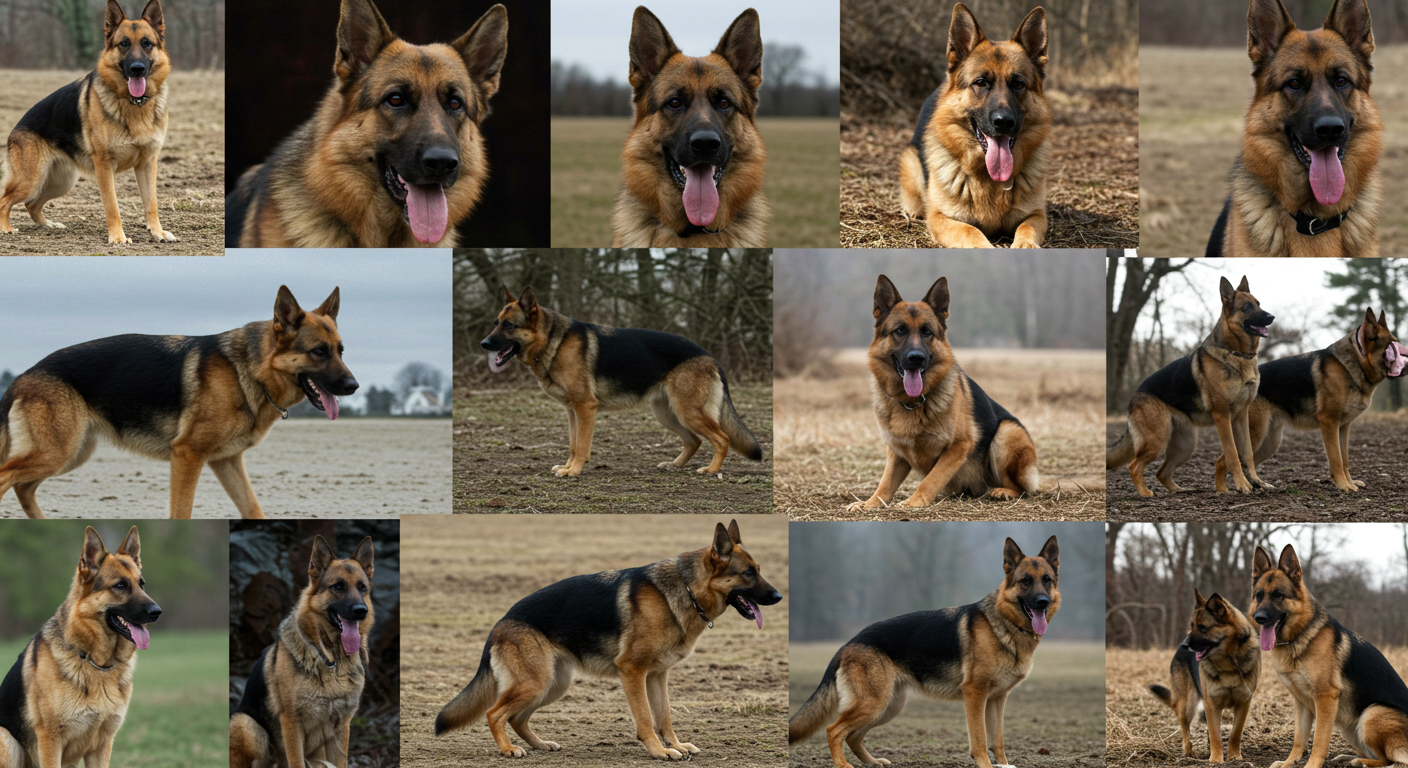
Spot the difference at a glance, and it’s often in the stance. Working line German Shepherds boast a straighter back, more level topline, and a compact, muscular build that screams functionality. They’re typically a bit smaller and thicker—males around 22-26 inches at the shoulder, weighing 65-90 pounds—with powerful legs for agility and endurance. Coats are medium-length, practical for all-weather work, in colors like sable, black, or bi-color. Their heads are proportionate, eyes alert, and overall vibe? Rugged and ready.
Show line German Shepherds, bred for the spotlight, have that signature sloped back and deeply angulated hindquarters, creating a dramatic, flowing gait that’s a judge’s dream. They’re often larger and more elegant—males up to 26 inches, 75-95 pounds—with broader chests and longer coats in striking black-and-tan or red-and-black patterns. The angulation isn’t just pretty; it’s designed for show-ring poise, but it can affect movement outside the arena. Both lines shed like pros (hello, double coats), but working lines might edge out in weather resistance due to their denser, less flashy fur. If you’re into hikes or herding simulations, the working line’s sturdy frame wins; for a dog that turns heads at the park, show lines steal the show.
Temperament and Personality Traits
Ah, the heart of the breed—temperament. Working line German Shepherds are wired for action: high-drive, intensely focused, and bursting with prey drive. They’re confident to the point of fearless, with a strong work ethic that makes them thrive on tasks. Picture a dog that shadows you like a pro bodyguard, always scanning for “threats” (or squirrels). But that intensity means they’re not couch potatoes—they need outlets for their energy, or boredom can lead to mischief. Loyal? Absolutely. Affectionate with their pack? Once earned, it’s unbreakable. Still, their sharpness requires socialization from puppyhood to balance protectiveness with approachability.
Show line pups lean toward the laid-back side of the spectrum: calmer, more social, and eager to please. They’re still smart as whips and protective, but with a softer edge—think gentle giant who loves belly rubs over bite work. Lower drive means they’re less likely to overwhelm new owners, making them fantastic with kids or in multi-pet homes. That said, don’t mistake calm for lazy; they crave mental puzzles and playtime to stay happy. Overall, working lines suit those who want a partner in crime; show lines are the easygoing best friend.
Training and Performance Capabilities
German Shepherds are brainiacs across the board, but lines shine differently in the ring (or field). Working lines are training superstars for pros: their laser focus and drive make them naturals at Schutzhund, police K9 units, or search-and-rescue. Early, consistent training is non-negotiable—positive reinforcement channels their intensity, but skip it, and you might have a dog outsmarting you at every turn. They excel in high-stakes environments, with grips strong enough for tug-of-war that doubles as protection drills.
Show lines? They’re obedience gold for everyday folks. Eager to learn and less intense, they pick up commands fast—perfect for agility classes, therapy work, or just a well-mannered family dog. Training is straightforward: short, fun sessions with treats and praise keep them engaged without overwhelming their milder drive. Both need mental stimulation (puzzle toys, anyone?), but working lines demand more structure to prevent frustration. Pro tip: Start puppy classes early for either—socialization builds that rock-solid confidence the breed is famous for.
Health and Longevity Considerations
Health-wise, neither line is flawless, but breeding focus influences risks. Working lines often fare better structurally—their straighter backs and athletic builds reduce strain on hips and elbows, leading to lower dysplasia rates. They’re rugged, with lifespans pushing 12-14 years if exercised right. Common issues? Bloat from big appetites or joint wear from nonstop action, but ethical breeders screen rigorously via OFA (Orthopedic Foundation for Animals) certifications.
Show lines, with their sloped toplines and angulation, can be prone to hip/elbow dysplasia, degenerative myelopathy, and arthritis—exaggerated traits sometimes amplify genetic weak spots. Lifespans hover at 10-12 years, though top breeders mitigate this with health testing. Both benefit from balanced diets, joint supplements, and vet check-ups, but working lines might dodge some skeletal drama. Always choose breeders who prioritize health over hype—it’s the real measure of quality.
Breeding Practices and Ethical Considerations
Breeding isn’t just about pups; it’s about legacy. Working line breeders chase titles in sport trials, selecting for drive, nerve stability, and working proofs—think IPO-rated parents. This ensures pups inherit that unbreakable focus, but it demands experienced homes to match.
Show line programs revolve around AKC/SV conformation wins, emphasizing structure, coat, and movement. It’s a beauty contest with health checks, producing dogs that wow visually while still being versatile. Ethical breeders in both camps health-test (hips, eyes, hearts) and temperament-evaluate, avoiding extremes that compromise welfare. Beware puppy mills—opt for those transparent about pedigrees and guarantees. Responsible breeding preserves the GSD’s versatility for generations.
Which Line is Right for Your Lifestyle?

So, working or show? It boils down to you. If your days involve runs, advanced training, or protection needs, a working line will be your tireless teammate—provided you’re up for the commitment. Families with active kids or space for romps? They’ll bond deeply, but expect a dog that shadows every step.
For apartment dwellers, first-timers, or those wanting a chill-but-watchful companion, show lines fit like a glove. They’re adaptable, affectionate, and less demanding on your schedule, ideal for therapy visits or casual hikes. Hybrids exist too—dual-purpose dogs blending traits—but pure lines offer predictability. Whichever you choose, remember: a well-raised GSD is loyal, smart, and loving. Match the line to your energy, and you’ll have a four-legged friend for life.
In the end, both working and show line German Shepherds embody the breed’s timeless appeal: courage wrapped in devotion. Dive into local clubs or breeders to meet them firsthand—nothing beats that wag to seal the deal.
References
- Mittelwest German Shepherds. (2025). Differences Between German Shepherd Show & Working Lines. https://www.mittelwest.com/blog/differences-between-german-shepherd-show-working-lines/
- German Shepherd Shop. (2020). The German Shepherd Dog – Working Line VS Show Line. https://germanshepherdshop.com/blogs/list/the-german-shepherd-dog-working-line-vs-show-line
- Performance K9 Training. (2021). Here’s How Show Line And Working Line German Shepherds Are Different. https://performancek9training.com/heres-how-show-line-and-working-line-german-shepherds-are-different/
- American Kennel Club. (n.d.). German Shepherd Dog Breed Information. https://www.akc.org/dog-breeds/german-shepherd-dog/