German Shepherds are often hailed as one of the smartest dog breeds out there—and for good reason. With their sharp minds, unwavering loyalty, and natural drive to work, these versatile companions thrive on challenges that keep both their bodies and brains buzzing. But intelligence isn’t just a gift; it’s something you can nurture and sharpen through targeted training exercises. If you’re a proud German Shepherd owner looking to boost your dog’s cognitive skills, reduce boredom-induced behaviors like chewing or digging, and strengthen your bond, you’ve come to the right place.
In this comprehensive guide, we’ll dive into a variety of training exercises designed specifically for the German Shepherd’s high-energy, problem-solving personality. From simple obedience drills to advanced scent games, these activities draw on their herding heritage and protective instincts. Whether your pup is a bouncy puppy or a seasoned adult, incorporating these into your routine can lead to a happier, more confident dog. Let’s get started on unlocking that brilliant potential!
Using Play as a Training Tool for German Shepherds
Why Mental Stimulation Matters for German Shepherds
Before we jump into the exercises, it’s worth understanding why your German Shepherd craves mental workouts as much as physical ones. Ranked third in Stanley Coren’s The Intelligence of Dogs, German Shepherds excel in adaptive intelligence—the ability to solve problems independently and learn from their environment. Without enough brain teasers, they can become restless, leading to issues like excessive barking or destructive habits.
Mental stimulation helps by releasing dopamine, the “feel-good” chemical that rewards effort and curiosity. It also builds confidence, improves focus, and even enhances physical coordination. According to experts at the American Kennel Club (AKC), breeds like the German Shepherd benefit from a mix of structured training and play-based challenges to mimic their working roles, such as search-and-rescue or police work. Aim for 15-30 minutes of brain games daily, alongside their usual exercise, to keep things balanced and prevent burnout.
Basic Obedience: Building a Strong Foundation for Smarter Learning

You can’t enhance intelligence without a solid base, and basic obedience training is the perfect starting point. German Shepherds are quick learners, often mastering commands in just a few repetitions, which makes this phase both rewarding and efficient.
Start with core commands like “sit,” “stay,” “down,” and “come.” Use positive reinforcement—treats, praise, or a favorite toy—to encourage compliance. For instance, teach “heel” during walks to sharpen focus amid distractions. The AKC recommends beginning as early as 8 weeks old, progressing to off-leash reliability by 6-12 months.
To amp up the intelligence factor, add variations: Practice “sit-stay” while hiding behind a door, or “down” on different surfaces like grass or carpet. These tweaks force your dog to adapt, fostering problem-solving skills. Over time, this foundation makes advanced exercises easier, turning your German Shepherd into a responsive, thoughtful partner.
Puzzle Toys and Interactive Games: Fueling Curiosity at Home
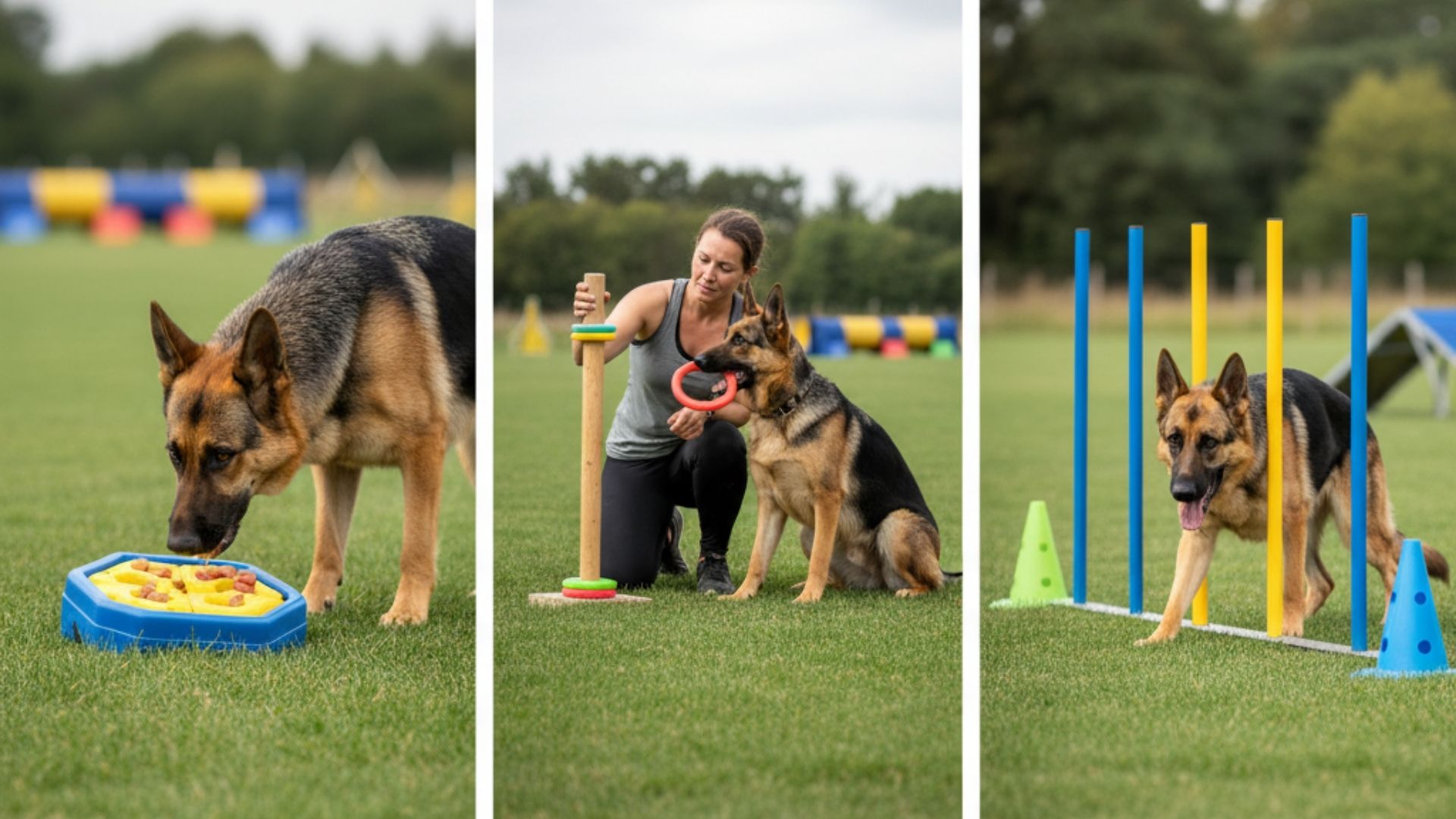
One of the easiest ways to sneak in mental workouts is through puzzle toys, which tap into a German Shepherd’s foraging instincts. These aren’t just time-killers; they’re tools for teaching patience, persistence, and strategic thinking.
Top picks for durable, breed-appropriate options include the Kong Classic (stuff it with peanut butter or kibble and freeze for a longer challenge) or the Outward Hound Nina Ottosson puzzle boards, where dogs slide compartments to reveal treats. Snuffle mats—fabric mats with hidden pockets for scattering food—are another favorite, mimicking natural scent-hunting in the wild.
For a DIY twist, try the AKC’s “muffin tin shell game”: Place treats in some cups of a muffin tin, cover with tennis balls, and let your dog figure out which to nudge. Or create a “hot and cold” game by hiding a toy and giving verbal cues like “hotter” (you’re close) or “colder” (you’re far) as they search. These activities can burn as many calories mentally as a 30-minute walk does physically, keeping your energetic Shepherd engaged without wearing out your backyard.
Rotate toys weekly to maintain novelty—German Shepherds bore easily, and fresh challenges prevent frustration. Watch as your dog’s problem-solving time decreases from minutes to seconds, a clear sign of growing smarts.
Agility Training: Where Body Meets Brain
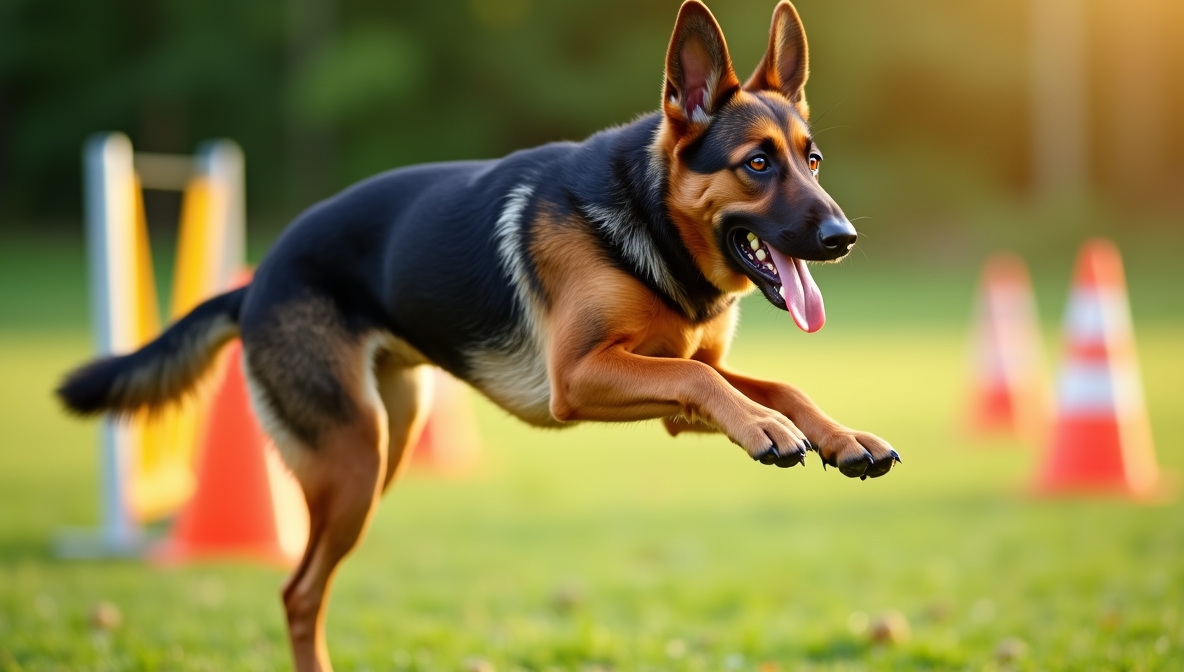
If your German Shepherd loves to zoom, agility training is a match made in heaven. This high-octane sport involves navigating obstacle courses with jumps, tunnels, weaves, and seesaws, all under your guidance. It’s not just about speed; it’s a masterclass in mental agility, requiring split-second decisions and unwavering handler trust.
The benefits are twofold: Physically, it builds muscle, improves balance, and burns energy (ideal for a breed that needs 2 hours of exercise daily). Mentally, it hones focus, impulse control, and spatial awareness—skills that translate to everyday obedience. As noted by agility experts, German Shepherds’ elastic gait and herding background make them naturals, often competing at elite levels.
Start simple at home with a DIY course: Use chairs for tunnels, broomsticks over boxes for jumps, and hula hoops for targeting. Progress to classes via the AKC or USDAA for structured fun. Sessions of 10-15 minutes, 3-4 times a week, can transform a scatterbrained pup into a laser-focused athlete. Plus, the shared triumphs deepen your emotional connection, making training feel like play.
Scent Work: Tapping into Their World-Class Nose
German Shepherds were born to sniff—think police K-9s tracking suspects or search dogs finding the lost. Scent work harnesses this superpower, turning it into a thrilling intelligence booster that’s low-impact and suitable for all ages.
Begin with basic “find it” games: Hide treats around the house and encourage your dog to use their nose over eyes. Graduate to birch essential oil (a safe, AKC-approved scent) on cotton swabs tucked into boxes or tins. The goal? Teach an alert like sitting or pawing when they detect the target.
Tools like scent vessels (small tins) and starter kits keep it organized. Practice in distraction-free zones first, then outdoors. This exercise sharpens memory, discrimination (distinguishing scents), and confidence, as dogs learn they’re “good at something” uniquely theirs. It’s especially great for rainy days or older Shepherds with joint issues.
Pro tip: End sessions on a high note with praise, not treats, to build intrinsic motivation. Over weeks, you’ll see your dog’s nose twitching with purpose, a testament to their evolving intellect.
Advanced Tricks and Socialization Challenges: Leveling Up
Once the basics are down, introduce tricks that demand creativity, like “spin,” “roll over,” or “take a bow.” Use clicker training—a marker sound paired with rewards—to pinpoint exact behaviors, accelerating learning for quick-study breeds like yours.
Socialization weaves in too: Enroll in group classes or dog parks for “leave it” drills around distractions. Hide-and-seek with you as the “prey” adds unpredictability, teaching adaptability. These aren’t fluff; they’re real-world applications that prevent fear-based reactions and promote calm decision-making.
For extra flair, try “urban agility”: Navigate city obstacles like curbs or benches, combining scent cues with commands. This holistic approach ensures your German Shepherd’s intelligence shines in varied scenarios, from home to hikes.
Daily Routines and Tips for Success
Consistency is key—integrate exercises into meals (use kibble for puzzles) or walks (add scent stops). Track progress in a journal: Note what clicks and adjust difficulty to avoid plateaus.
Tailor to your dog’s age and energy: Puppies need short, frequent bursts; adults crave complexity. Always prioritize safety—warm up before agility, supervise toys to prevent ingestion. If issues arise, consult a certified trainer.
Patience pays off. Celebrate small wins with enthusiasm; your encouragement is the ultimate reward. Before long, you’ll have a dog who’s not just smart, but joyfully so.
Enhancing your German Shepherd’s intelligence isn’t about turning them into a show pony—it’s about enriching their life and yours. Through obedience, puzzles, agility, scent work, and beyond, these exercises honor their heritage while curbing modern mischief. Commit to the fun, and watch your loyal sidekick evolve into an even more remarkable companion. Ready to start? Grab a toy, hide a treat, and let the brain games begin. Your German Shepherd will thank you—with a wag and a whole lot of sparkle in those alert eyes.
References
- American Kennel Club. (2024). Fun, Cognitive Training Games to Make Your Dog Smarter. Retrieved from https://www.akc.org/expert-advice/training/fun-cognitive-training-games-for-dogs/
- American Kennel Club. (2022). The Best Sports To Do With Your German Shepherd Dog. Retrieved from https://www.akc.org/expert-advice/lifestyle/the-best-sports-to-do-with-your-german-shepherd-dog/
- American Kennel Club. (2021). How to Train a German Shepherd Puppy: Timeline 8 Weeks to 2 Years. Retrieved from https://www.akc.org/expert-advice/dog-breeds/puppy-training-timeline-for-your-german-shepherd-dog/
- American Kennel Club. (2024). DIY Cognitive Dog Toys For When You’re Stuck At Home. Retrieved from https://www.akc.org/expert-advice/lifestyle/do-it-yourself-cognitive-dog-toys-for-home/