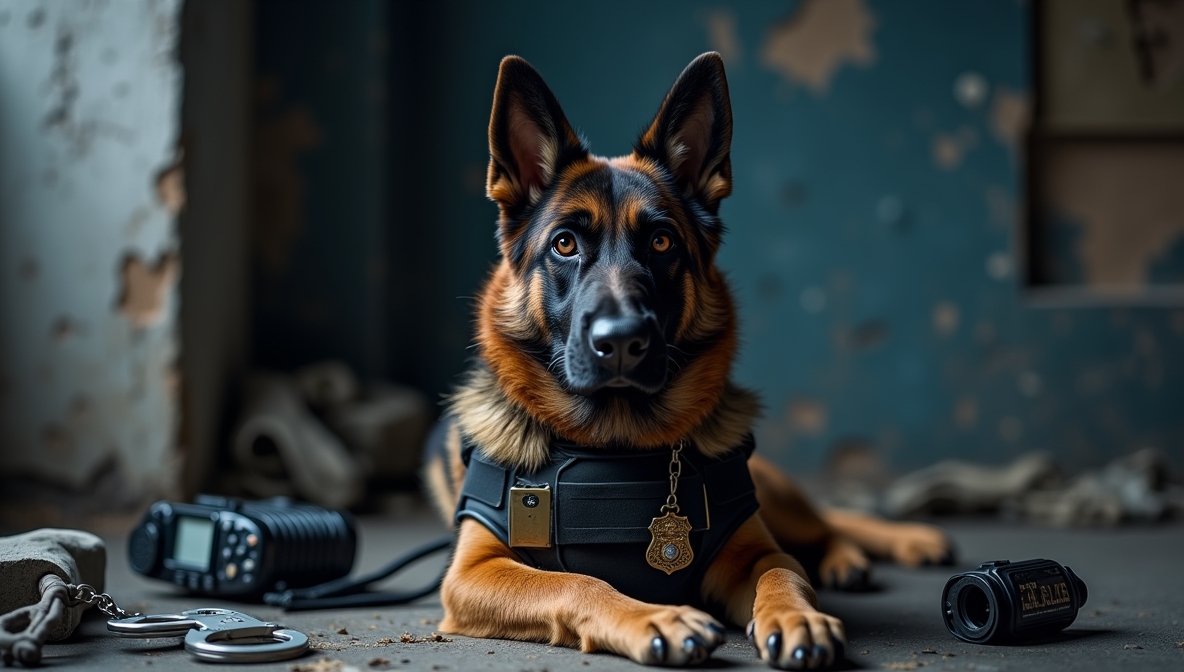
The German Shepherd Dog, often simply called the GSD, stands as one of the most iconic and versatile breeds in the world today. Renowned for its intelligence, loyalty, and striking appearance, this working dog has evolved far beyond its humble beginnings as a herder on the rolling hills of 19th-century Germany. But what many don’t realize is how pivotal historical events—from the industrial stirrings of a unified Germany to the brutal theaters of two world wars—molded this breed into the multifaceted companion we know. In this deep dive into German Shepherd history, we’ll explore how these moments not only defined the breed’s physical and temperamental traits but also cemented its role in society, from the front lines of battle to the silver screen and modern service work. If you’re a German Shepherd enthusiast or just curious about breed development, understanding these historical events reveals why the GSD remains a symbol of resilience and adaptability.
German Shepherds in Military Operations: Then and Now
The Origins: From Humble Herders to a Visionary’s Dream
The story of the German Shepherd breed begins in the late 1800s, a time when Germany was rapidly industrializing and unifying under a new empire. As vast sheep-flocking operations dwindled due to urbanization and the rise of rail transport, traditional herding dogs faced an uncertain future. Enter Captain Max von Stephanitz, a cavalry officer and agriculture enthusiast born into nobility in 1864. Disillusioned by the inconsistent quality of existing German sheepdogs—which varied wildly in size, coat, and temperament—von Stephanitz set out to create the ultimate working herder: a dog that combined brains, brawn, and unwavering loyalty.
In 1899, at a dog show in Karlsruhe, von Stephanitz spotted his ideal specimen—a medium-sized, wolf-gray dog named Hektor Linksrhein, later renamed Horand von Grafrath. For 200 gold marks, he purchased the four-year-old and, with friend Artur Meyer, founded the Verein für Deutsche Schäferhunde (SV), the world’s first German Shepherd club. Horand became the breed’s foundation stock, registered as SZ 1, and his lineage—carefully inbred with selective outcrosses from Thuringian and Württemberg lines—laid the groundwork for the modern GSD. Von Stephanitz’s motto, “Utility and intelligence must always take precedence over beauty,” drove the breed standard, emphasizing traits like endurance, stable temperament, and protective instincts.
This era’s socioeconomic shifts, including the decline of rural herding, were crucial. Without them, von Stephanitz’s quest might have remained a hobby. Instead, it birthed a breed engineered for versatility, setting the stage for its explosive growth in the 20th century.
World War I: From Farm Fields to the Front Lines
As Europe plunged into World War I in 1914, the German Shepherd’s nascent potential was thrust into the unforgiving crucible of modern warfare. Von Stephanitz, ever the military man, had long envisioned his creation serving in protective roles, but the war accelerated this destiny. The German Army quickly adopted GSDs as messenger dogs, sentries, ammunition carriers, and even guides for wounded soldiers—tasks that demanded the very intelligence and drive von Stephanitz had bred for.
These dogs became legends on the battlefield. One standout, Filax of Lewanno, reportedly saved 54 injured troops by ferrying messages through no-man’s-land under heavy fire. Their heroism wasn’t lost on Allied forces either; returning soldiers smuggled pups home, sparking international fascination. By war’s end, GSDs had proven their mettle, transitioning from obscure herders to symbols of canine valor. This period profoundly shaped the breed: rigorous military selection amplified desirable traits like focus and fearlessness, while weeding out weaker lines. Post-armistice, the SV’s breed surveys—introduced in 1922—formalized evaluations for breeding, ensuring only the toughest survived to propagate the line.
Yet, victory came at a cost. Anti-German sentiment in the U.S. and Britain led to a humiliating rebranding: the breed became the “Shepherd Dog” in America and “Alsatian” in the UK, a linguistic scar that lingered until the 1970s. Still, WWI’s legacy endures in the GSD’s enduring military association, forever linking its history to the trenches.
The Interwar Years: Hollywood Stardom and Cultural Shifts
The roaring 1920s brought a surprising pivot for the German Shepherd: from war hero to Hollywood heartthrob. As soldiers’ tales fueled demand, films starring rescued war dogs like Rin Tin Tin—a GSD pup smuggled from France by American corporal Lee Duncan—catapulted the breed to global fame. Rin Tin Tin’s debut in 1922’s The Man from Hell’s River saved Warner Bros. studio from bankruptcy, spawning over 25 movies and even influencing the Oscar statuette’s design. Strongheart, another WWI veteran turned star, joined the pantheon, drawing massive crowds to silent films like The Silent Call.
This cinematic boom had ripple effects on breed development. Puppy mills sprang up to meet the hype, flooding markets with subpar “German police dogs” that diluted quality and sparked backlash. Responsible breeders, like Mrs. Harrison Eustis in Switzerland, countered by pioneering guide dog programs; her Fortunate Fields Kennels supplied the first Seeing Eye dogs in 1929, leveraging GSDs’ wartime rescue skills for the blind. Meanwhile, in Germany, von Stephanitz navigated political turbulence as Nazis infiltrated the SV, drawn by Adolf Hitler’s adoration of his loyal GSD, Prinz. Though von Stephanitz resigned in protest before his 1936 death, his standards held firm.
These cultural events refined the GSD’s image, emphasizing not just utility but charisma and trainability—traits that would prove invaluable in the looming storm of WWII.
World War II: A Breed Divided by Global Conflict
World War II tested the German Shepherd like never before, with both Axis and Allied powers deploying thousands in roles from mine detection to patrol. In Germany, GSDs echoed WWI exploits as messengers and guards, their numbers bolstered by Hitler’s personal favoritism—he gifted pups to allies like Mussolini. On the Allied side, the U.S. launched its K-9 Corps in 1942, training over 18,000 dogs at camps like Front Royal, Virginia. GSDs dominated, comprising the bulk of the seven approved breeds by 1944, excelling in scout, sentry, and messenger duties across Europe and the Pacific.
Heart-wrenching stories abound: Chips, a mixed-breed but often credited in GSD lore, charged machine-gun nests in Sicily, earning a Purple Heart. Purebred GSDs like those in the 15 War Dog Platoons thwarted ambushes and located casualties, saving countless lives. The war’s toll was steep—many dogs were euthanized post-service due to “aggression” fears or resource shortages—but survivors influenced breeding. American lines, drawing from pre-war imports like Pfeffer von Bern, emphasized show-ring elegance, while German stock faced devastation, rebuilt through outcrosses like Axel von der Deininghauserheide.
WWII’s dual role—beloved by foes and friends—irrevocably globalized the GSD, diversifying lines and embedding it in law enforcement and search-and-rescue worldwide.
Post-War Revival: Standardization, Diversification, and Enduring Legacy
The atomic age dawned on a battered breed, but the GSD rebounded with astonishing vigor. In the U.S., the American Kennel Club restored the “German” name in 1931 (fully embraced post-WWII), and imports like Bernd von Kallengarten in the 1950s infused vigor into American lines, improving angulation and topline. Germany’s SV rebuilt meticulously, producing champions like Troll von Richterback by 1957. The 1960s saw stud dog dynasties emerge, blending old bloodlines for balanced, athletic dogs.
Today, historical echoes persist: GSDs serve in every U.S. military branch, police forces globally, and even disaster response, like the 9/11 rubble searches. Yet, challenges like hip dysplasia—traced to wartime inbreeding—prompt ongoing health reforms. Von Stephanitz’s vision endures, adapted to a world where these dogs herd families as much as sheep.
In reflecting on how historical events shaped the German Shepherd breed, it’s clear: from imperial unification to global wars, each chapter forged a dog that’s equal parts guardian, partner, and icon. Whether you’re considering adding a GSD to your home or simply admiring their storied past, this breed’s journey reminds us of the profound bond between humans and canines in times of triumph and trial.
References
- American Kennel Club. (2024). German Shepherd Dog History: Where the Breed Originated. Retrieved from https://www.akc.org/expert-advice/dog-breeds/german-shepherd-dog-history/.
- German Shepherd Dog Club of America. (n.d.). Breed History. Retrieved from https://www.gsdca.org/breed-history/.
- Military Working Dog Teams Support Association. (n.d.). German Shepherd Dogs in the Military: A Brief Historical Overview. Retrieved from https://www.mwdtsa.org/german-shepherd-dogs-military-brief-historical-overview/.
- Wikipedia Contributors. (2024). German Shepherd. Retrieved from https://en.wikipedia.org/wiki/German_Shepherd.
- U.S. Army. (2024). War Dogs: How WWI Led to the Military Working Dog Program. Retrieved from https://www.war.gov/News/Feature-Stories/Story/Article/3895789/war-dogs-how-wwi-led-to-the-military-working-dog-program/.