German Shepherds, often hailed as the ultimate versatile working dog, have long been synonymous with excellence in the world of canine athletics. With their intelligence, athleticism, and unwavering drive, these majestic dogs don’t just participate in sports—they dominate them. Whether navigating obstacle courses at breakneck speeds, tracking scents through dense wilderness, or demonstrating pinpoint obedience under pressure, German Shepherds bring a unique blend of power and precision to every competition. If you’re a proud owner or simply fascinated by this iconic breed, understanding their prowess in dog sports can deepen your appreciation for their capabilities. In this comprehensive guide, we’ll explore the history, key disciplines, standout performers, and the many rewards of getting your German Shepherd involved in these exhilarating activities.
Breeding Standards: How German Shepherds are Bred for Excellence
The History of German Shepherds in Canine Sports
The story of German Shepherds in sports and competitions is deeply intertwined with the breed’s origins as a purpose-bred working dog. Emerging in late 19th-century Germany, the breed was meticulously developed by Captain Max von Stephanitz, a cavalry officer who envisioned a dog that combined herding prowess with superior intelligence and trainability. Von Stephanitz purchased a promising herding dog named Hektor Linksrhein in 1899, renaming him Horand von Grafrath—the foundation of the modern German Shepherd line. His goal? To create a dog that could excel in real-world tasks, from guarding livestock to serving in military roles.
By the early 1900s, as industrialization shifted rural economies, von Stephanitz and the Verein für Deutsche Schäferhunde (SV) introduced Schutzhund—a rigorous trial designed to test the breed’s working aptitude. This sport, which we’ll dive into later, became the gold standard for evaluating German Shepherds, ensuring only the most capable dogs were bred. World War I catapulted the breed into global prominence, with German Shepherds serving as messengers, sentries, and search dogs on the front lines. Their reliability earned them admiration worldwide, and post-war, they transitioned seamlessly into civilian competitions.
The 20th century saw German Shepherds branching into American kennel club events through organizations like the American Kennel Club (AKC), founded in 1884. Today, with over 100 years of competitive history, the breed continues to evolve, blending traditional working trials with modern agility and rally formats. This rich legacy not only preserves the German Shepherd’s heritage but also keeps them at the forefront of dog sports innovation.
Schutzhund/IPO: The Ultimate Working Dog Trial
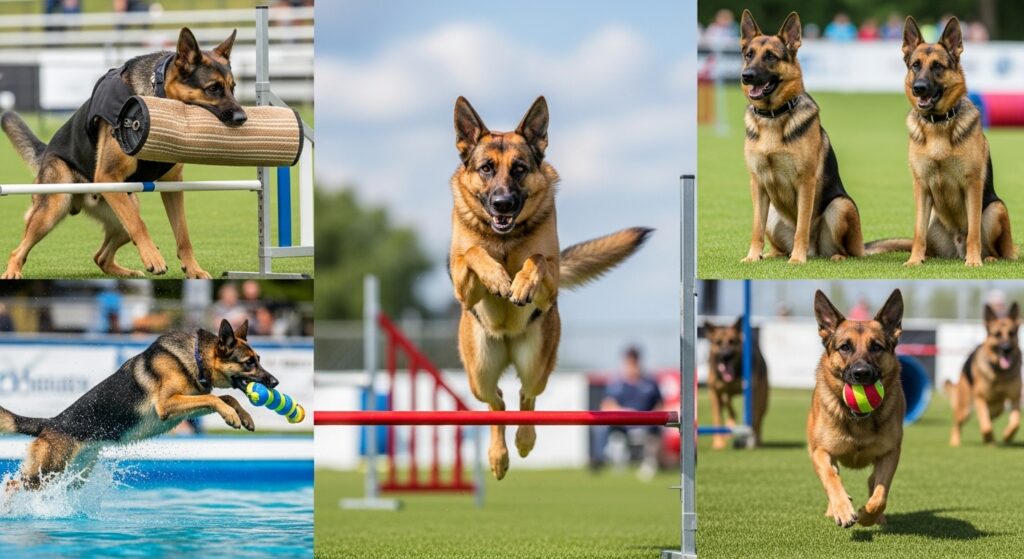
At the heart of German Shepherd competitions lies Schutzhund, now known internationally as the International Prüfungsordnung (IPO). Developed in 1914 as a breed suitability test, it evaluates a dog’s mental and physical soundness across three phases: tracking, obedience, and protection. Far from a mere game, Schutzhund simulates the demands of police, military, and search-and-rescue work, making it a cornerstone for working-line German Shepherds.
In the tracking phase, dogs follow intricate scent trails—sometimes up to 1,800 paces long—through varied terrain, pinpointing hidden articles with laser focus. This tests their olfactory prowess and independence, traits honed over generations of herding ancestry. Obedience follows, with off-leash heeling, retrieves over hurdles, and gunshots to assess composure under distraction. Finally, protection involves controlled confrontations with a decoy, where the dog must alert, engage, and release on command—proving its courage without aggression.
German Shepherds thrive here due to their innate drives: a powerful prey instinct balanced by handler loyalty. Competitions, sanctioned by groups like the United Schutzhund Clubs of America (USCA), draw enthusiasts worldwide, with titles like SchH1, SchH2, and SchH3 marking progressive mastery. For breeders, passing Schutzhund is often mandatory for stud approval, ensuring the breed’s vitality. It’s no wonder this sport remains a rite of passage, fostering dogs that are as much devoted companions as elite athletes.
Agility: Speed and Precision on the Course
For those seeking high-octane thrills, agility competitions showcase the German Shepherd’s explosive athleticism. Introduced in the UK in 1978 and popularized in the US by the AKC in 1994, agility involves handler-dog teams racing through obstacle courses featuring A-frames, seesaws, tunnels, jumps, and weave poles—all within a set time limit.
What makes German Shepherds stars in this arena? Their blend of speed, focus, and body awareness allows them to handle the course’s twists with grace. At events like the AKC National Agility Championship, you’ll see these dogs clearing 24-inch jumps effortlessly, their handlers directing with subtle cues. Training starts young, emphasizing positive reinforcement to build confidence and prevent injuries from the breed’s prone hip dysplasia.
Success stories abound: German Shepherds frequently podium in large classes, their endurance shining in multi-round formats. Whether competing locally or at the prestigious Westminster Kennel Club Agility event, these dogs turn every run into a symphony of motion, proving they’re not just fast—they’re fearless.
Obedience and Rally: Mastering Commands
Obedience trials and rally obedience offer a more measured showcase of the German Shepherd’s intellectual depth. In traditional obedience, dogs perform a series of precise exercises: heeling on and off-leash, figure-eights around cones, recalls, stands for examination, and retrieves—scored on accuracy and enthusiasm. Rally adds a fun twist, with signs dictating improvised maneuvers like U-turns or jumps, encouraging teamwork in a less rigid format.
German Shepherds’ trainability—often ranked second only to Border Collies in intelligence studies—makes them naturals. Their eagerness to please translates to near-perfect scores, with many earning Utility Dog (UD) titles after mastering advanced retrieves and signals. Rally, introduced by the AKC in 2005, lowers the barrier for newcomers, letting families enjoy the sport’s camaraderie without intense pressure.
Participating builds unbreakable bonds, as handlers learn to communicate non-verbally. For German Shepherd owners, these disciplines are therapeutic, channeling the breed’s high energy into focused achievement.
Herding: Returning to Their Roots
Though urban life has softened their image, German Shepherds’ herding heritage runs deep, making them formidable in herding trials. Competitions, governed by the AKC’s Herding program since 1980, simulate stock work with sheep, ducks, or cattle, testing a dog’s ability to control movement instinctively.
In the ring, handlers direct from outside a fenced arena, using whistles or voice to guide the dog in gathering, driving, and penning livestock. German Shepherds excel with their “eye”—that intense stare that cows animals into compliance—combined with bold outruns. Levels range from basic (Herding Tested) to advanced (Junior, Senior, Master), with courses growing in complexity.
Recent standouts include Mercedes, the German Shepherd who claimed the Herding Group at the 2025 Westminster Kennel Club show, dazzling judges with her poise and power. Earlier, River the German Shepherd triumphed in the 2022 Herding Group, underscoring the breed’s resurgence in this ancestral sport. For pet owners, herding instills confidence and purpose, tapping into the breed’s evolutionary drive.
Search and Rescue: Heroes in Action
Beyond the show ring, German Shepherds shine in search-and-rescue (SAR) competitions, where skills translate directly to life-saving missions. SAR dogs train for air-scenting (detecting human odor in the wind) or trailing (following ground scents), often in simulated disaster scenarios.
Organizations like the Federal Emergency Management Agency (FEMA) host trials testing endurance over rugged terrain, rubble piles, and water crossings. German Shepherds’ superior noses—up to 100,000 times more sensitive than humans—and unflappable temperament make them ideal. In competitions, they must alert handlers to “victims” buried under debris or hidden in forests, earning certifications from groups like the National Search and Rescue Dog Association.
Real-world impact is profound: From the 9/11 rubble to earthquake zones, these dogs have located hundreds. Competitions hone their edge, ensuring they’re ready when duty calls— a testament to the breed’s selfless spirit.
Other Exciting Sports: Flyball, Dock Diving, and Beyond
German Shepherds’ versatility extends to niche sports like flyball, a relay race over hurdles to a ball-releasing box, where their speed and teamwork shine in North American Flyball Association (NAFA) tournaments. Dock diving, involving leaps into water for toys, taps their love of fetch and builds confidence against their natural wariness of swimming.
Lure coursing and barn hunt add variety: The former mimics prey chasing with a mechanical lure, while the latter involves scenting rats in hay bales. Even canine freestyle—dancing routines to music—highlights their grace and obedience. These activities keep the breed engaged, preventing boredom in a dog wired for work.
Famous German Shepherds in Competition
While German Shepherds boast countless unsung heroes, a few have etched their names in history. In herding, Mercedes’ 2025 Westminster win marked a milestone, her elegant drives captivating audiences. River’s 2022 victory followed suit, proving the breed’s herding mettle.
In Schutzhund, legends like Lord vom Haus Targa—a multi-titled competitor—set benchmarks for protection work. Agility phenoms such as Epic the German Shepherd have shattered course records at AKC nationals, while obedience greats like Highroller’s Flair earned over 20 Utility titles. These icons inspire breeders and handlers, showing what’s possible with dedication.
Benefits of Participating in Dog Sports
Engaging your German Shepherd in sports isn’t just about ribbons—it’s transformative. Physically, it combats obesity and strengthens joints, crucial for a breed prone to dysplasia. Mentally, the stimulation curbs destructive behaviors, channeling their high IQ into positive outlets.
For owners, it’s a bonding bonanza: Shared triumphs build trust and communication. Competitions foster community, connecting you with like-minded enthusiasts. Plus, certified achievers often qualify for therapy or service roles, amplifying your dog’s impact.
German Shepherds in sports and competitions embody the breed’s timeless appeal: a perfect fusion of brawn, brains, and heart. From Schutzhund’s intensity to agility’s adrenaline, these activities honor their heritage while adapting to modern fun. If you’re considering dipping a paw in, start with local clubs—your German Shepherd will thank you with tail-wags and triumphs. Ready to join the pack? The arena awaits.
References
- American Kennel Club. (2024). German Shepherd Dog History. Retrieved from https://www.akc.org/expert-advice/dog-breeds/german-shepherd-dog-history/
- German Shepherd Dog Club of America. (n.d.). Breed History. Retrieved from https://www.gsdca.org/breed-history/
- United Schutzhund Clubs of America. (n.d.). German Shepherd Dogs. Retrieved from https://www.germanshepherddog.com/about/german-shepherd-dogs/ [web:3, web:12]
- Wunderhaus German Shepherds. (n.d.). Sports for the German Shepherd Dog. Retrieved from https://www.wunderhausgsd.com/sports-for-the-german-shepherd-dog.html [web:5, web:30]
- Trupanion. (2024). German Shepherd Breed Guide: History & Facts. Retrieved from https://www.trupanion.com/pet-blog/article/german-shepherd [web:13, web:27]
- Mittelwest German Shepherds. (2024). German Shepherd Dogs Effectively Help In Search & Rescue. Retrieved from https://www.mittelwest.com/blog/german-shepherd-dogs-help-in-search-rescue/
- German Shepherd Dog Club of America. (n.d.). Search and Rescue Dogs. Retrieved from https://www.gsdca.org/search-and-rescue-dogs/